Having a Wedding Dress Made in NZ
From First Consultation to Final Fitting
Having a wedding dress made is a very different experience from ordering a standard gown from a bridal shop. You do not need to arrive with a finished design or know exactly which fabric you want. The process begins with a conversation about the styles you are drawn to, how you want the dress to feel, and what will suit your figure, wedding and budget. I have been designing and creating wedding dresses for decades and dressed hundred of brides. Here I explain what happens from the first consultation through to the final fitting, including timelines, design decisions, fittings and costs.
Is having a wedding dress made right for me?
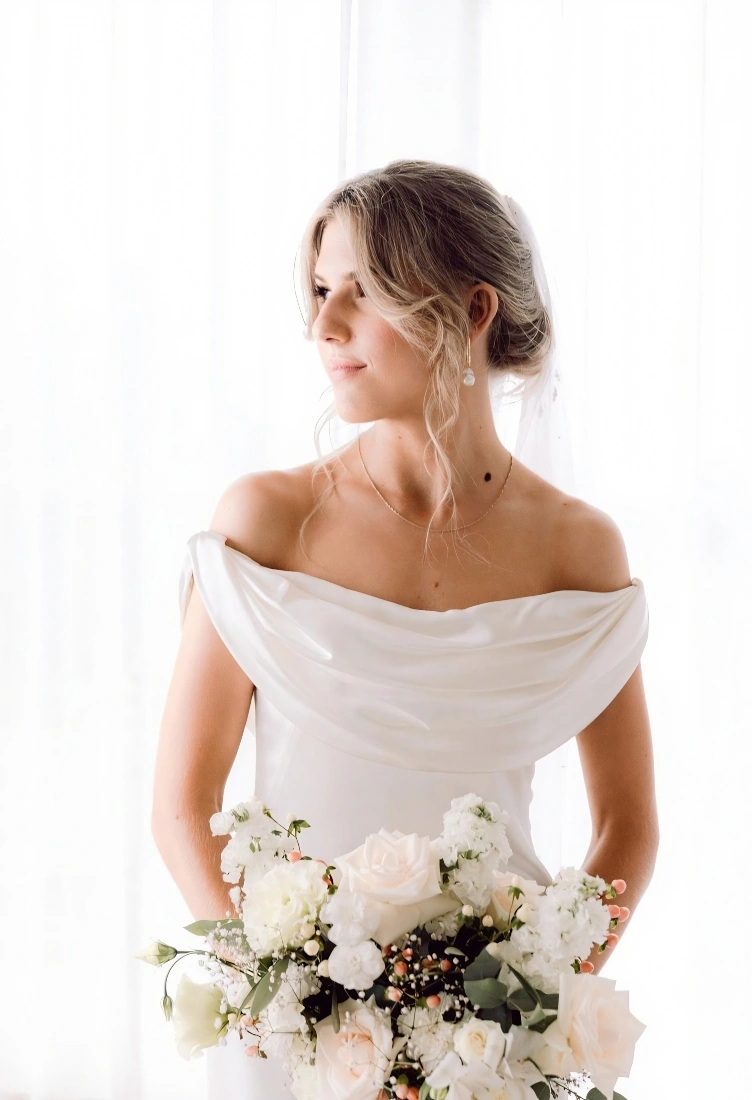
Having a wedding dress made can be a good choice if you have a particular style in mind, would like to combine elements from different dresses, or have found it difficult to get the right fit from standard bridal gowns.
It is also worth considering if fabric, comfort or construction matters to you. A made-to-measure dress can be designed around your proportions, the way you like to dress and how you want to feel on your wedding day.
You do not need to want something unusual or elaborate. Many custom wedding dresses are beautifully simple. The difference lies in the cut, fit, fabric and the small details that make the gown feel personal.
When should I contact a wedding dress designer?
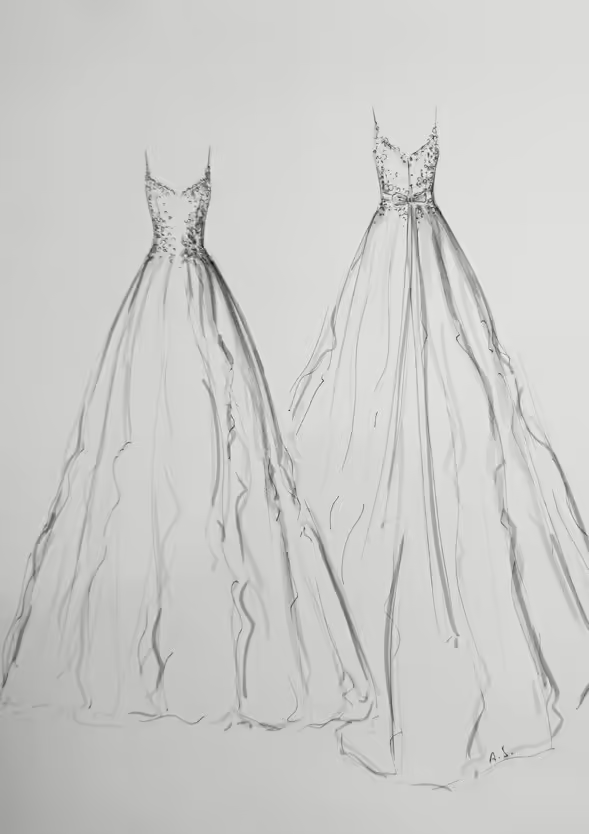
Ideally, contact a designer around six to twelve months before your wedding. This allows time to develop the style, source fabrics, make the pattern and complete the fittings without rushing.
A simpler dress may require less time, while a gown with intricate lace, beading, handwork or complex construction can take longer. Fabric availability can also affect the timeline.
It is still worth getting in touch if your wedding is closer. Depending on my current workload and the style of dress you have in mind, a shorter timeframe may be possible.
What happens during the first consultation?
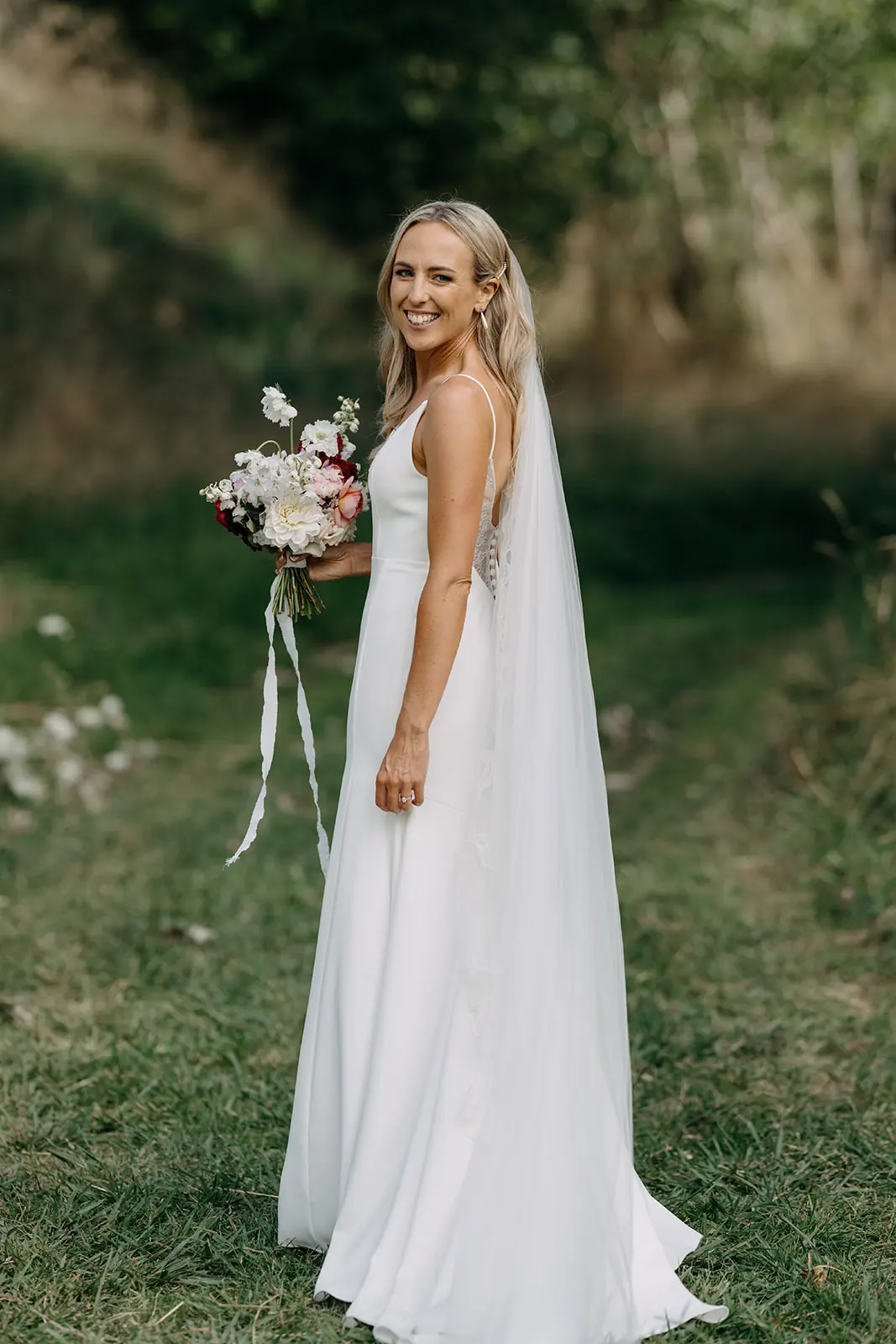
The first consultation is a relaxed conversation about you, your wedding and the type of dress you are considering.
We will look at the silhouettes, fabrics and details you are drawn to. You may try on selected gowns or bodices to see how different shapes and proportions work on you. We will also talk about the wedding setting, time of year, comfort, budget and any practical considerations.
From there, I can begin suggesting a direction for the dress and explain what would be involved in making it.
Do I need to know exactly what I want?
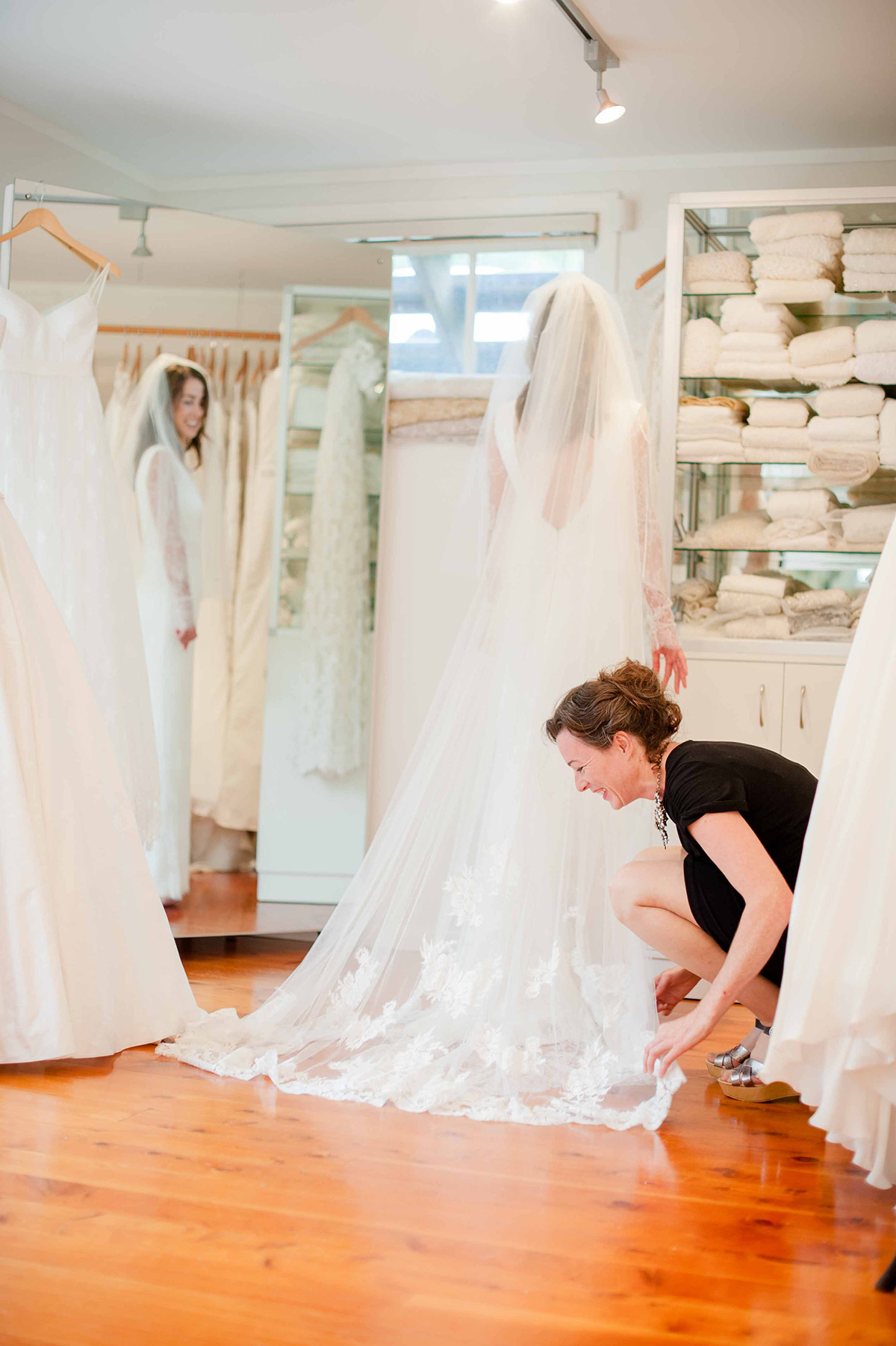
No. Many brides arrive with a collection of ideas rather than one finished design.
You may know that you like a particular neckline, fabric or skirt shape, but feel unsure about how the different elements should come together. Part of my work is helping you identify what is most important and translating those ideas into one coherent wedding dress.
It can be helpful to bring a small selection of images, but you do not need an extensive Pinterest board. A few carefully chosen references usually tell me more than dozens of unrelated dresses.
How is the design decided?
The design develops through discussion, trying on shapes and looking at the way different elements work together.
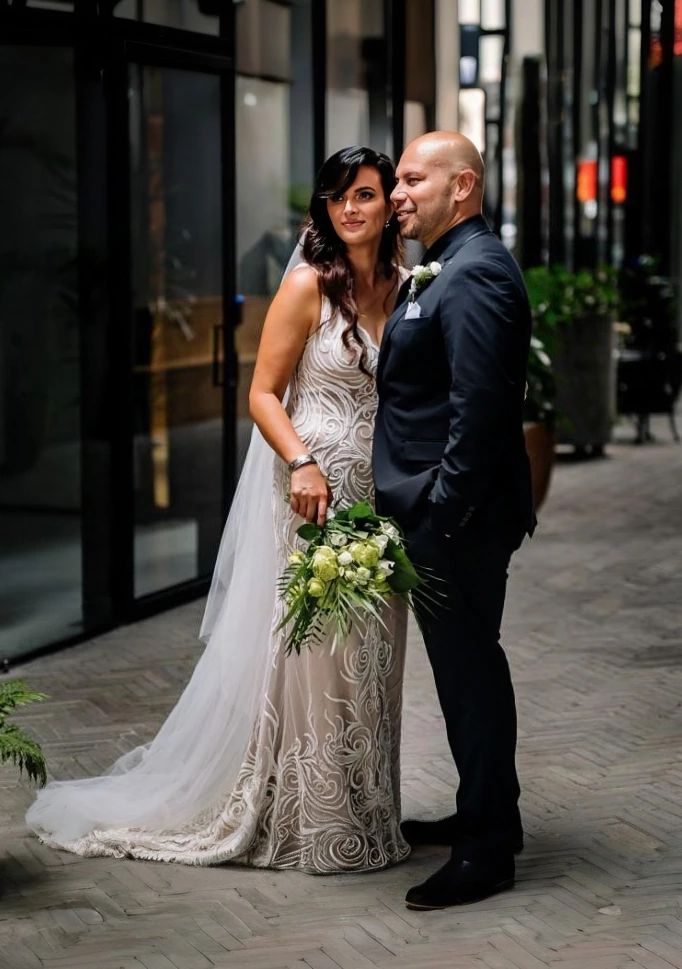
We consider the overall silhouette first, followed by the neckline, back, sleeves, waistline, skirt and train. I also look at balance and proportion: where the bodice should finish, how full the skirt should be and where seams or draping will sit on your figure.
The final design should feel like one dress rather than a collection of separate ideas. Once the direction is clear, I can confirm the main details, fabrics, construction and price.
How are the fabrics selected?
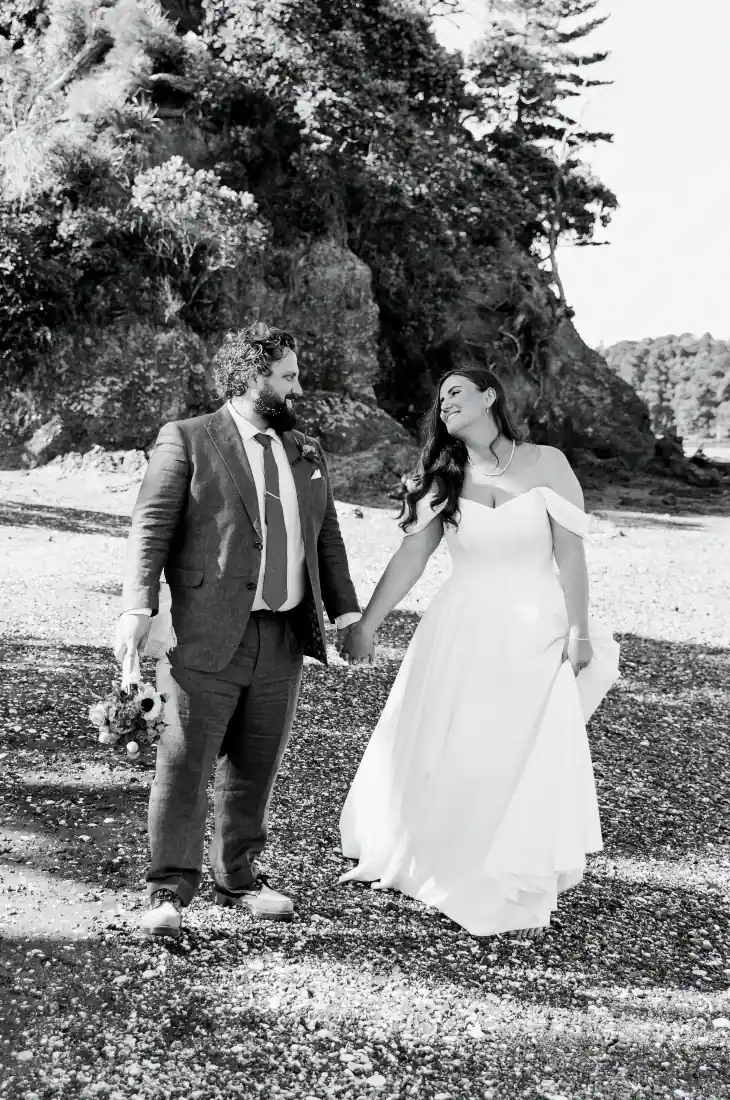
Fabric has a significant effect on the finished dress. It determines how the gown falls, how much structure it has and how it moves.
Mikado satin creates a crisp, sculptural shape. Crepe gives a softer, more fluid line. Chiffon and tulle add movement, while lace, embroidery and beading bring texture and detail.
I will show you fabrics that suit the proposed design and explain how each one will behave. We also consider weight, transparency, comfort, the season and the amount of structure required underneath.
What is a calico or toile fitting?
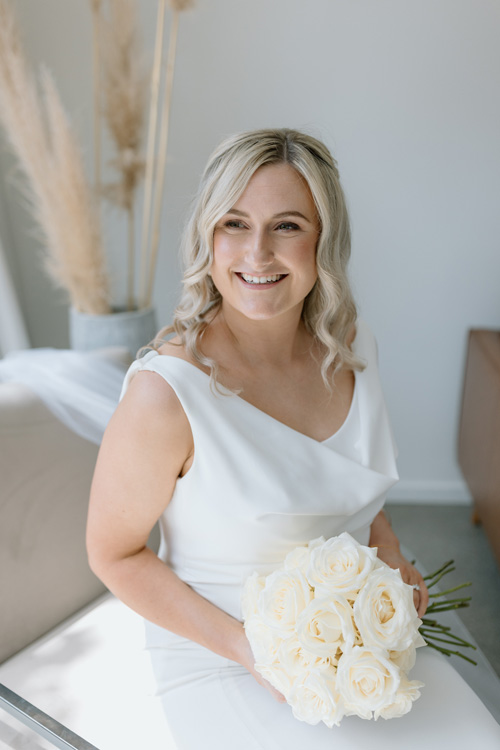
A calico, sometimes called a toile, is a test version of the bodice or dress made in plain fabric before the final gown is cut.
It allows me to check the fit, neckline, waist position, proportions and overall shape directly on your body. It is much easier to refine the pattern at this stage than after cutting into the final bridal fabric.
The calico may look simple, but it is an important part of the custom process. It gives us the opportunity to adjust the design and make sure the foundations of the dress are right.
My charge for a calico toile is currently NZ$200. This amount will usually be credited towards the gown when you proceed with the booking.
How many fittings are normally required?
The number of fittings depends on the design and the complexity of your wedding dress.
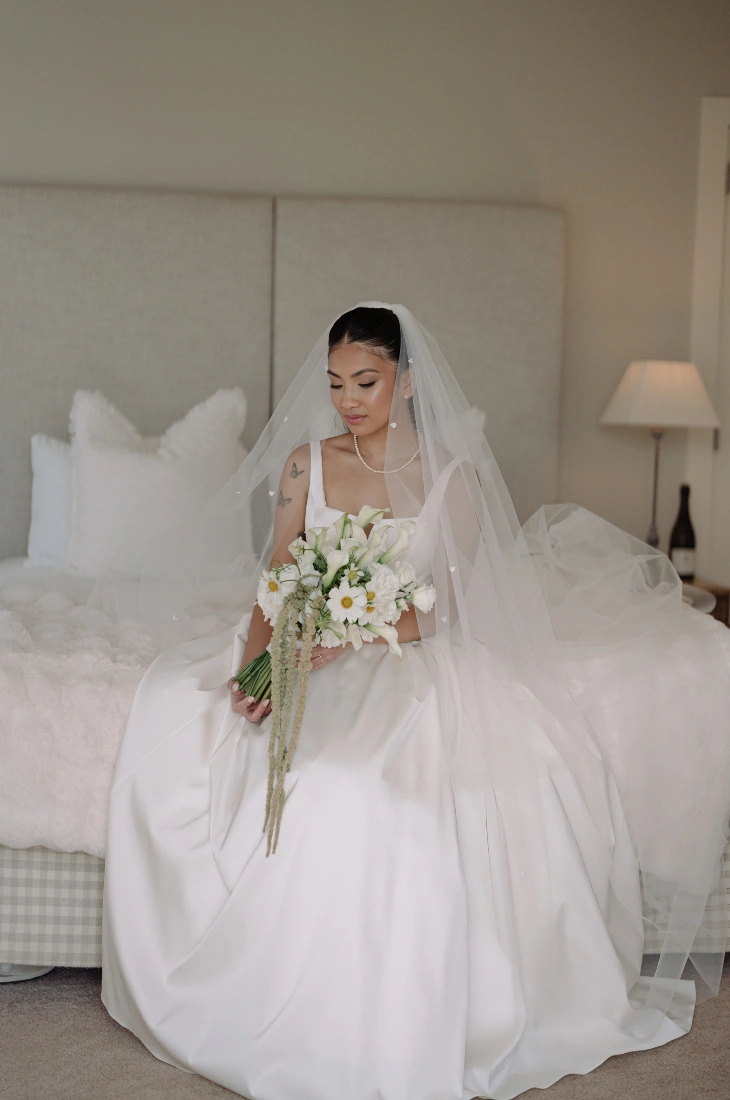
Most custom gowns involve several calico fitting, followed by fittings once the gown has been cut in the final fabric. Additional appointments may used to refine the bodice, skirt, sleeves, straps, closures and internal support.
The final fitting checks the complete dress, including the hem, fastening and train. A more intricate gown may need additional appointments, particularly where lace placement, draping or hand finishing is involved.

When is the final hem completed?
The hem is usually completed towards the end of the fitting process, once the dress is sitting correctly and the final shoes have been chosen.
You should bring the shoes you intend to wear, or another pair with exactly the same heel height. Even a small difference can change how the skirt falls.
Leaving the hem until later also allows for any final adjustment to the waist, bodice or skirt before the length is permanently finished.
What does a custom wedding dress cost?
My custom wedding dresses currently begin at approximately NZ$4,000 for a relatively simple design in a plain fabric.
Dresses involving lace, intricate construction, additional handwork or more complex pattern cutting generally begin from around NZ$4,500. Highly detailed gowns are usually NZ$5,000 or more.
The final price depends on the fabric, construction, amount of work and level of detail. Once we have discussed the design, I will give you a clear, all inclusive, quotation before the work begins.
What happens if my measurements change?
Small changes in measurement are common during the months leading up to a wedding and can usually be accommodated through the fitting process.
It is important to let me know if you expect a significant change in weight or if there are any medical, pregnancy or health considerations that may affect the fit. The earlier I know, the easier it is to plan the construction appropriately.
I recommend avoiding deliberate last-minute weight changes. A wedding dress is easiest to fit when measurements remain reasonably stable during the final weeks before the wedding.

Can a bride from outside Auckland have a wedding dress made?
Yes, provided you are able to travel to my Auckland studio for the essential appointments and fittings.
We can plan the schedule carefully and, where practical, combine stages to reduce the number of trips. The timing will depend on the design, your location and how often you are able to come to Auckland.
For brides travelling from further away, I recommend making contact early. This gives us more flexibility when arranging consultations, fittings and collection before the wedding.
Considering having a wedding dress made?
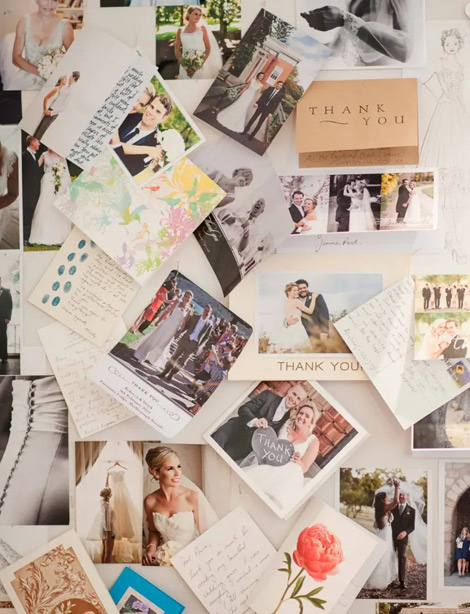
Having a wedding dress made is a collaborative process. You do not need to arrive with every detail decided; the design develops through conversation, fabric selection, pattern work and fittings until the dress feels right for you.
Read our brides testimonials or book an appointment at my Point Chevalier studio, just 5 minutes from Auckland City to discuss your ideas, timing and budget.